Types of Roof Defects Homeowners Should Know About
As a homeowner, you count on your roof to provide a lot of protection for you and your household. It keeps out the rain, debris, and the heat of the Las Vegas Valley. Roof defects can put this delicate balance at risk. There are various types of roof defects, usually tied to issues with materials, installation, weather exposure, or structural movement. If you ignore them, you run the risk of dealing with regular leaks, failure of the insulation, structural damage, and even roof replacement.
Defects are specific to the style of roof (such as a pitched or flat roof), the roofing material, and the age of the roof and various components. You’re also more likely to encounter common roof defects because of seasonal high UV exposure, wind, and monsoon rain in Las Vegas. With this guide, you’ll know the major defect categories to watch for, warning signs, and when you should call a professional for help.
Installation and Workmanship Roof Defects
Roofing workmanship defects can wreak plenty of havoc for your home, which highlights the importance of installation by a trained and qualified professional. Roof installation defects can include:
- Mis-nailed shingles that can split or fall off during high winds, exposing the roof decking
- Flashing defects due to poor installation, increasing the likelihood of leaks around chimneys or skylights
- Bad valley detailing that can cause the drainage system to fail
- Improper sealing around penetrations (like a rooftop HVAC system), which causes leaks during and after storms
- Uneven underlayment that imbalances the slope
- Improper roof ventilation that leads to heat buildup in the attic
It doesn’t take long for these issues to get bigger. Bad fastening can lead to lifted or cracked shingles. Gaps in the flashing create openings for leaks to spread, causing long-term structural damage. Poor sloping can cause ponding water that puts stress on the roofing structure or causes water damage over time.
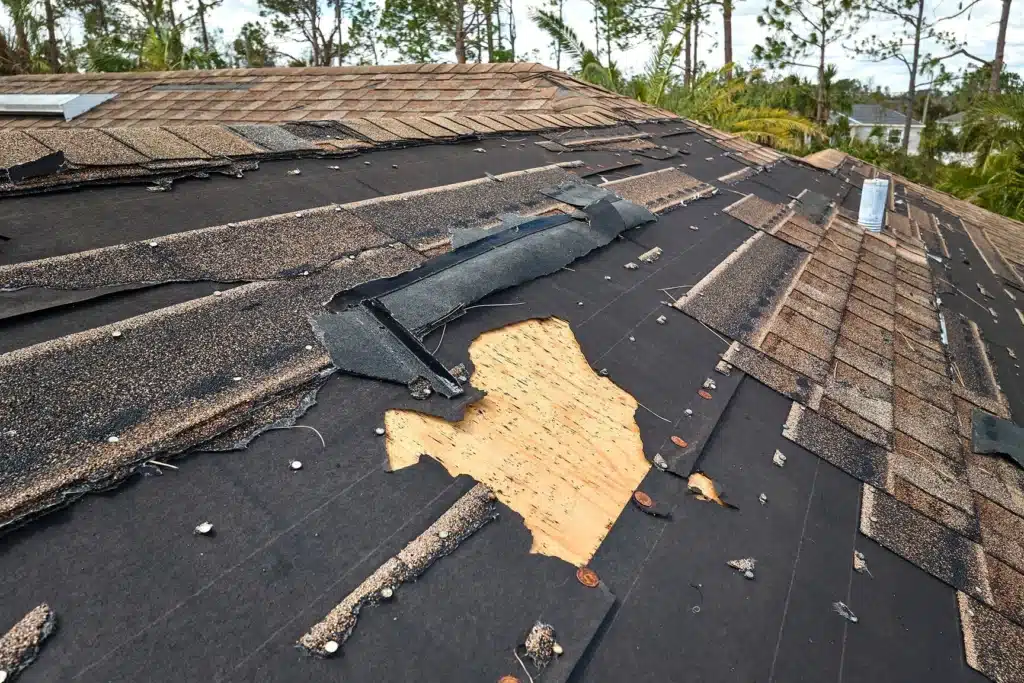
You can probably identify some of these problems if you look at your roof on occasion. Lifted shingles are pretty obvious, as they do not lie flat. Crooked shingle lines indicate that the shingles were not installed consistently. An excessively hot attic may reflect issues with the roof vents. You may also see nail pops on the roof or loose flashing. Indicators of damage from these defects include shingle granule loss in your gutters and recurring leaks in the same spot. Although you may notice these anytime, they are more likely to show up after high winds, heavy rains, or a big swing in temperature.
Material and Surface Roof Defects (Shingles, Membranes, Coatings, Tiles)
It’s probably unsurprising that a lot of these problems start with roofing material and membrane defects. The types of issues you are likely to see depend on the type of material and the style of roof:
- Shingles: You may see a shingle blistering, curling, cracking, missing granules, or having broken tabs.
- Tiles: Look for slippage, breakage, cracked mortar, or displaced ridge tiles.
- Flat or Low-Slope Membranes: Pay attention to splitting near the seams, roof punctures, material shrinkage, or alligatoring as the membrane contracts.
- Coatings: If your roof has protective or reflective coatings, take note of peeling, chalking, bubbling, or worn spots.
These issues can come up as a result of normal wear and tear but arrive more quickly due to faulty installation or maintenance. Common causes include aging due to heat or UV exposure, variability in manufacturing, heavy foot traffic, trapped moisture due to a roof leak, and natural expansion and contraction from temperature changes.
Keep an eye open for more obvious signs of defects. Look for changes in roof material color, bald patches, soft spots, lifted edges, or exposed underlayment. Spending a little time looking at your roof, especially after a big storm, is key to addressing small issues before they develop into major problems like roof sagging.
Water, Drainage, and Moisture-Related Roof Defects
Since the primary goal of your roof is to keep out moisture, you can bet that moisture-related roof defects cause a lot of problems. Flat roofs (and even some pitched roofs) can have issues with ponding or standing water, due to clogged roof drainage. Failed flashing provides an opening for leaks. Underlayment failure allows water to intrude underneath, putting your decking and the rest of the structure at risk.
Roof water intrusion is a vicious cycle that keeps causing damage until you address it. A minor gap, from chimney leak defects or other issues, allows water under the roofing surface. Trapped water causes material to break down, eventually leading to roof deck rot or mold growth. A rotting roof weakens the entire structure and spreads water damage to the rest of the house.
After a storm, walk around your home interior and exterior and look for signs of a leak. You may notice:
- Brown water stains on the ceiling
- Musty odors in the attic
- Bubbling paint
- Warped decking instead of a smooth roofing surface
- Pooling water that doesn’t drain after a day or two
- Algae or moss growth where water pools on the roof
Flat roofs are more likely to show signs of defects, which emphasizes the importance of regular maintenance.
Structural and Environmental Roof Defects (Movement, Wind, Heat, Storm Impact)
Poor installation and environmental factors can contribute to stress on the entire roof, which could create more serious structural defects. Structural issues often result from ongoing problems, causing a sagging roofline, deteriorating decking, loose fasteners, roof separation at the joints, or cracked rafters. Hot and cold cycles, high winds, hail, or debris can cause the surface to expand or contract or even puncture it. Prolonged sun exposure can make the roofing material and membranes brittle.
Request roof repair services as soon as possible if you see:
- Sudden sagging of a portion of the roof
- Large numbers of missing shingles after a storm
- Visible daylight in the attic
- Recurring leaks, particularly after storms
- Growing soft spots on the roof surface
These issues require a roof inspection to determine the cause and the appropriate solution.
In most cases, regular roof maintenance can keep these defects from requiring an expensive rebuild. Contact Ariat Roofing to learn more about how you can preserve your roof’s performance and lifespan.