Why Commercial Buildings Use Flat Roofs
Why Do Commercial Buildings Have Flat Roofs?
Flat roofing isn’t particularly common for residential homes, but it seems to be the default for many commercial buildings. Simply put, a flat roof is a low-slope roof with one line. So, why do commercial buildings have flat roofs? Commercial property owners often prefer flat roofing because it costs less to install, is usually easier to maintain, and provides some space for rooftop utilities and other usage. A flat roof also makes it easier to install energy-efficient systems like solar panels, which is a key advantage for the high heat of the Las Vegas Valley.
Flat roofs require slightly different maintenance and upkeep than a pitched roof, but for commercial buildings, the tradeoff is often worth it. With this guide, you’ll understand commercial flat roof benefits and factors you should keep in mind for the proper maintenance of your roof.
Cost, Speed, and Structural Simplicity of Flat Commercial Roofs
As a rule, bigger buildings increase complexity with every small decision, especially in the roof. Pitched framing with lots of valleys and different slopes complicates the installation and maintenance processes. It takes longer and costs more to finish the roof at construction and every roofing material replacement thereafter.
In this way, a flat roof provides a number of advantages. As the surface is fairly flat, roofing contractors need fewer protective measures to keep themselves from falling off. Roofing material is easier to transport up to the roof, which takes less time and simplifies installation. Besides drainage, flat roof structural requirements are often less complicated. The simpler geometry means that there are fewer custom cuts and fewer failure points, improving the quality of the installation. Less time to completion means that property owners can worry less about downtime, tenant disruption, or unexpected delays pushing back project deadlines.
All these factors, plus the fact that flat roofing simply requires less square footage to install, make a flat roof more cost beneficial as an upfront expense. Whether it requires less money over time depends on the property owner’s commitment to regular maintenance. To continue commercial flat roof cost savings, owners must be diligent with inspections and upkeep.
Rooftop Functionality: Equipment Space, Solar, and Future Flexibility
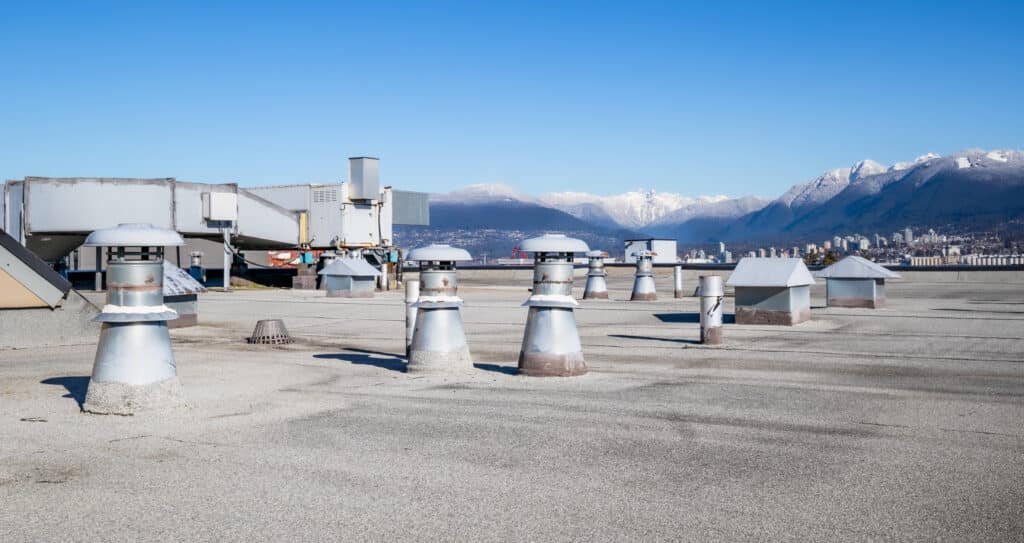
Efficiency in the use of space on a commercial property is key, which emphasizes the convenience provided by a flat roof. It’s not uncommon to install HVAC, satellite communications, or other rooftop equipment on commercial buildings. While this equipment might be easier to install and service on the ground, many commercial spaces simply cannot accommodate that approach.
The pitch of the roof significantly affects the efficiency of installation and maintenance for these services. A flat roof allows technicians to enter the area safely and perform their work with minimal hassle to property tenants, even if the techs aren’t accustomed to climbing on a roof. By comparison, servicing equipment on a pitched roof may take longer and create more complications for building access and function.
Flat roof installation also paves the way for future-proofing the building. Flat roofs are often more suitable for installation of solar panels, as the installer can put the panels at the optimal angle for peak production. Once HVAC, refrigeration, or mechanical equipment is installed, commercial flat roof retrofit options will be much simpler than other rooftop equipment replacement projects.
Energy Efficiency Benefits of Flat Roofs
In a region with a hot climate like the Southwest, rooftop energy efficiency is a major asset. You have plenty of options in decreasing heat gain in a commercial property, especially with a flat roof. Materials for flat or low-slope roofing often come with light colors or reflective membranes – known as a cool roof – that reflect sunlight away from the building. This advantage can decrease heat absorption that causes HVAC equipment to have to work harder, which is especially beneficial at the scale of a large commercial building.
Cool roofing is an important consideration in commercial areas due to the heat island effect. Reflecting light instead of absorbing it can help to keep the surrounding areas cooler, which is vital to managing the effects of the climate on the residents. Installing HVAC on flat commercial roofs offers several key gains in efficiency:
- Placement on the roof puts the system where the building needs it most, to shorten the time to effective cooling
- Use of efficient flat roof materials lowers HVAC load, which makes it easier to maintain a comfortable indoor temperature, even in large open spaces like warehouses, retail, or manufacturing
- Tapered insulation installed with flat roofing can serve double-duty to aid the drainage system for the roof and improve thermal performance
Keep in mind that these benefits depend on your material choice, insulation thickness, and the overall condition of your roof. A clean roof is more likely to reflect sunlight than one with dirty membranes. With the right setup and maintenance routine, you can enjoy lower cooling costs, less strain on your HVAC equipment, and better performance despite the heat.
Drainage and Weather Management on Low-Slope Roofs
When you think about management of a flat roof vs. sloped roof, drainage and weathering are the two biggest differences. Since a flat roof cannot use gravity to shed precipitation or debris downhill, it relies more heavily on the drainage system. Specifically, flat roof drainage for large buildings involves internal drains, scuppers around the perimeter of the building, tapered insulation, and downspouts. Larger commercial roofs may have even more concern than residential flat roofs, because larger square footage can dramatically increase the volume of water that you need to manage.
Las Vegas’s desert climate with rapid sun aging and sudden, heavy storms emphasizes the importance of effective drainage. Maintenance is key to preserving the commercial flat roof lifespan. When flat roofs start to fail, that failure often shows up as ponding, clogged drains, stress on the seams, or moisture intrusion under the roofing material. A plan for routine roof maintenance can often prevent these issues or keep them from causing significant damage.
Materials and Systems Built for Commercial Flat Roofs
Flat roofs for commercial structures come with different materials and membranes depending on various factors. Shingles and tiles usually aren’t available because they increase the risk of backflow or seepage at low slopes. Instead, you can usually choose from these options:
- Synthetic materials (commonly referred to as “single-ply”)
- Modified bitumen, which involves a combination of asphalt and polymers
- Built-up roofing, which uses layers of asphalt and fabric to provide a waterproof surface
- Spray foam systems, which rely on a liquid layer like polyurethane
The best choice depends on the flat roof load capacity, planned use for the building and roof, foot traffic, chemical exposure, budget, and expected lifespan. If you want additional energy efficiency, you’ll need to look for light-colored options or sealants that increase the reflectivity of the roof material.
Maintenance, Access, and Repair Practicality
A commercial flat roof may need additional attention to ensure its condition, but the convenience of the flat roof makes it easier to inspect and perform repairs. Since technicians and contractors can often access the roof via a staircase or elevator, they are less likely to fall while performing inspections and maintenance. This advantage increases the ease and success of scheduled checks, even during hot or inclement weather. Drainage and debris are the key points for commercial building owners to watch. Common commercial flat roof repair considerations include:
- Debris stuck in the drains
- Circles of dirt around the drains or other areas, indicating problems with ponding water
- Separation of roofing seams
- Punctures from foot traffic or rooftop work
- Blistering membranes, which indicates material damage or water intrusion
The time between the occurrence of the problem and the solution makes a significant difference to the outcome. Quick spotting of the problem, including clearing debris clogs or patching worn surfaces, can decrease the total cost of rooftop upkeep and minimize the likelihood of damage to the structure.
When a Flat Roof Is (and Isn’t) the Right Choice
For many property owners, flat commercial roofs make a lot of sense. A flat roof works well for these applications:
- Buildings with large footprints
- Projects that require the installation of heavy equipment on the roof
- Strict budgets
- Requirements for easy commercial roof maintenance access
- Ability to add upgrades like solar panels or retrofits over time
In some cases, a commercial flat roof may not be the best option. These include buildings that prioritize residential-style design, have a very small footprint, or need steep shedding of water.
Regardless of your choice in roofing design, performance of your commercial roof depends on professional installation and proactive maintenance.
At Ariat Roofing, we specialize in commercial roofing services. We’re happy to show you why commercial roofs are flat and the benefits of each option. We can help you maximize your roof lifespan and performance, with regular roof maintenance, expert upkeep for commercial flat roof drainage systems, and roof inspections by expert contractors. You can count on us for commercial roof repair that minimizes damage and preserves your building’s condition. Reach out to Ariat Roofing to schedule an inspection or talk with an expert about the performance of your low-slope roof.