
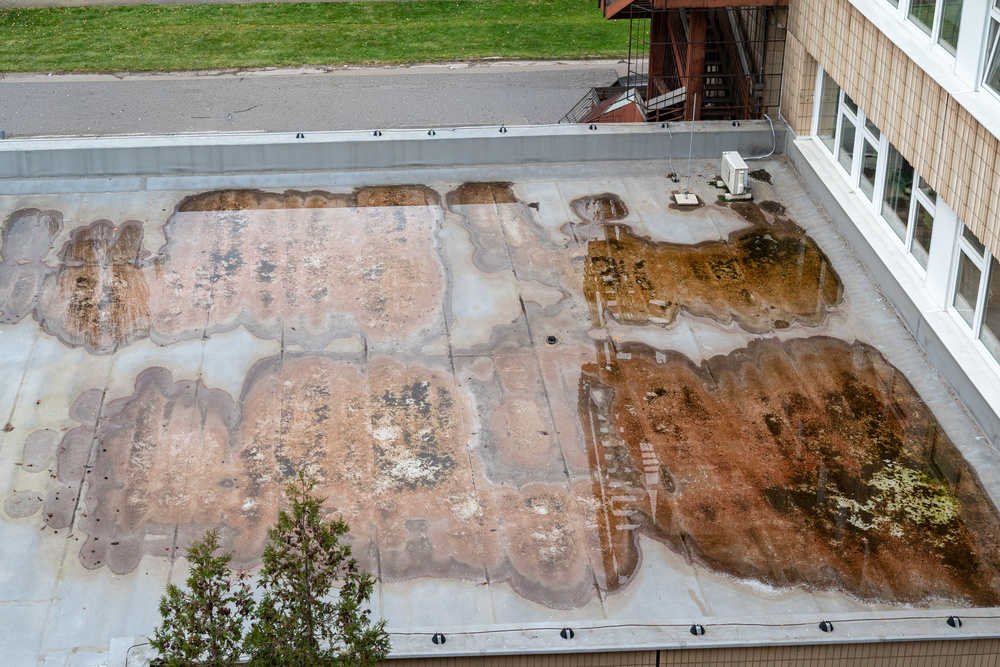
How to Fix Ponding Water on Flat Roofs and Prevent Future Damage
A flat roof is convenient for many reasons, but only if it drains well. Flat roofing is fairly easy to install, works well in several architectural styles, and is a popular option for commercial buildings. Since the roof has such a low slope, however, drainage is a key aspect of the function of the roofing. When it doesn’t drain well (or at all), you may notice pools accumulating after a rainstorm. With this guide, you’ll know what to look for and how to fix ponding water on a flat roof.
Understanding Ponding Water on Flat Roofs
When you look outside after a storm and see puddles everywhere, you’ll notice that they accumulate on flat surfaces. The slope of the surface, and the conditions that allow or prevent the water from draining, determines how much a puddle can grow and how long it lasts.
On a flat roof, those puddles, more commonly referred to as ponding water, can happen due to excess precipitation and poor drainage. The Asphalt Roofing Manufacturers Association defines ponding water as pools of water on the roof that do not drain within 48 hours.
Although flat roofs seem to be truly flat, they must have a subtle pitch to allow water or snow runoff to drain away. Even with ideal design, you may have ponding water due to these factors:
- Improper installation
- Clogged drains
- Compressed insulation
- Structural sagging
These structural defects create a low spot where the water can collect and sit. If the water evaporates within a few hours, you may not have a serious issue. On the other hand, when the water consistently pools and is still there days later, you need to address the problem. Failing to fix ponding water can lead to leaks, breakdown of the roof membrane, and stress on the roofing structure.
Why Ponding Water Is a Serious Problem
You count on your roof to protect you and your belongings from the elements, so it’s critical that you not ignore ponding water. Your roofing relies on a system of drains and structural designs that eliminate water, so the structure remains generally dry and functional.
If you’ve ever carried a five-gallon bucket of water a long distance, you know that water is heavy. That kind of weight sitting on your roof for days can put stress on the decking or compress the insulation. It also adds to the live load, which your roofing structure may not be able to support for long periods of time.
Over time, that standing water can bring other problems to your building. Continuous moisture accelerates the degradation of flat roofing materials like EPDM or bitumen. Eventually, you’ll probably have to deal with membrane staining, increased heat absorption, or moss growth on the roof.
As with asphalt shingle roof services, early identification and resolution is key to the best long-term results. It’s important to request a professional flat roof inspection whenever you notice a problem. Letting the ponding water sit for days can reduce the roof lifespan and void your manufacturer’s warranty.
Diagnosing the Cause of Ponding Water
To get to the root of the problem, you may need to perform some tasks to get a sense of what is causing your flat roof drainage issues. Common roof ponding causes include:
- Improper sloping, due to poor installation or settling of the building over time
- Clogged drains or scuppers, usually full of debris, vegetation, or ice
- HVAC issues, such as a clogged condensate line or excess weight that creates a depression in the roofing surface
- Compressed insulation
- Deflection of the roof deck, where the deck changes shape and creates low spots due to mechanical loads
Plan to perform a visual inspection and conduct a brief drainage test. Head up to the roof after each rainstorm and look for pooling spots. Identify the location of the drain and test for clogs. Pour some water into the roof drain system to confirm that it functions properly. During professional roof inspections, you can request elevation mapping to confirm correct sloping. If your roofing contractor believes that deflection or load issues are creating the problem, they may recommend collaborating with a structural engineer to identify and execute the best solution.
Proven Solutions for Fixing Ponding Water on Flat Roofs
When you notice a problem with ponding water, it’s time to request roof repair. These solutions can help mitigate the cause, not just the pooling water:
- Drainage: Adding scuppers, interior drains, or overflow systems can enhance the water flow, so it leaves the roof faster.
- Sloping: Using a tapered insulation system or crickets can help guide water toward the drainage system.
- Localized Repairs: Filling small depressions with roof-grade fillers or polyurethane foam can resolve elevation issues, but they should only be used when the depression is not caused by damage that needs another solution.
- Structural Fixes: Reinforcing the decking or replacing compressed insulation can bolster the roof structure to maintain proper sloping.
- Surface Protection: Applying a roof coating, such as silicone or elastomeric paint, can provide additional support to areas where ponding is expected. This solution is more preventative than corrective.
If you’re worried about what it might cost for flat roof resurfacing or roof deflection repair, keep in mind that a prompt solution is almost always a better investment than waiting and hoping the problem goes away. Most long-term improvements for clogged roof drains or roof slope correction require professional evaluation and repair, not DIY fixes.
Choosing the Right Flat Roof Materials to Prevent Ponding
If you want to minimize your risk of a roof leak or other problem as a result of ponding, choosing the right roofing material makes a big difference. When making your decision, weigh the long-term return on investment that comes from proper system design, professional installation, and routine maintenance. Although you can choose from a variety of materials, some are hardier than others. For example, PVC or silicone-coated membranes tend to resist water damage better than modified bitumen or built-up roofing.
Similar to the tactics you’d take for tile roofing services, you need to be sure that the system works for the roofing material, structure, and design. Adding tapered insulation or crickets directs the water to the right place. A lightweight structural deck can support the surface, improve the slope, and reduce ponding after a storm.
The use of the roof and the condition of the roofing structure also affect your risk of needing waterproof flat roof repair over time. A reinforced membrane, such as EPDM or a urethane coating, can reduce compression due to heavy loads or high traffic. A reflective roof coating reduces thermal movement that breaks down the roofing material and structure as it ages.
Preventing Future Ponding on Flat Roofs
As with most aspects of property ownership, preventing the problem in the first place is the fastest and most convenient. Be sure to stay on top of your roof maintenance, as you are more likely to get advance notice of minor drainage issues before they lead to a damaging roof leak or structural sagging. Ideal prevention includes:
- Keeping your drains clean, especially after a big storm or dropping of seasonal debris like leaves or pine needles
- Scheduling an annual roof inspection, with photos that help you track low spots or changes to the surface over time
- Minimizing storage or foot traffic in areas that do not have proper reinforcement to handle the load
- Adding a roof coating for ponding water or increasing the insulation, which can help you cut down on heat stress and reduce deflection as the roofing structure ages
With roofing upkeep, you get what you put into it. If you hardly look at your roof and rarely schedule an inspection, you may be surprised by expensive and complicated repairs when you have a problem. Putting maintenance on your regular schedule helps you to be more aware of the unique aspects of your roof, so you are better prepared to deal with the next challenge.
When to Call a Professional Roofer
When you think you might have an issue with ponding water, it’s always best to get a professional opinion. Occasional, minor pooling might be easy to brush toward the drain and eliminate as part of your maintenance tasks. If you notice that the water sits for more than 48 hours without draining, accumulates in dips that you can see even in dry weather, or creates visible membrane damage, you should call a professional.
At Ariat Roofing, our experts can assess your roof slope, identify issues with the subsurface, and repair flashing or structural issues. We specialize in services that are proactive in managing your roof as an asset, such as flat roof regrading. In many cases, these services can help you avoid a costly full replacement.
If you’re already dealing with ponding water on your flat roof, you can count on us to diagnose ponding on commercial or residential roofing, with prompt solutions that restore positive drainage. To learn more about our services or find a fix for your flat roof drainage issues, contact us to schedule a professional roof assessment today.